
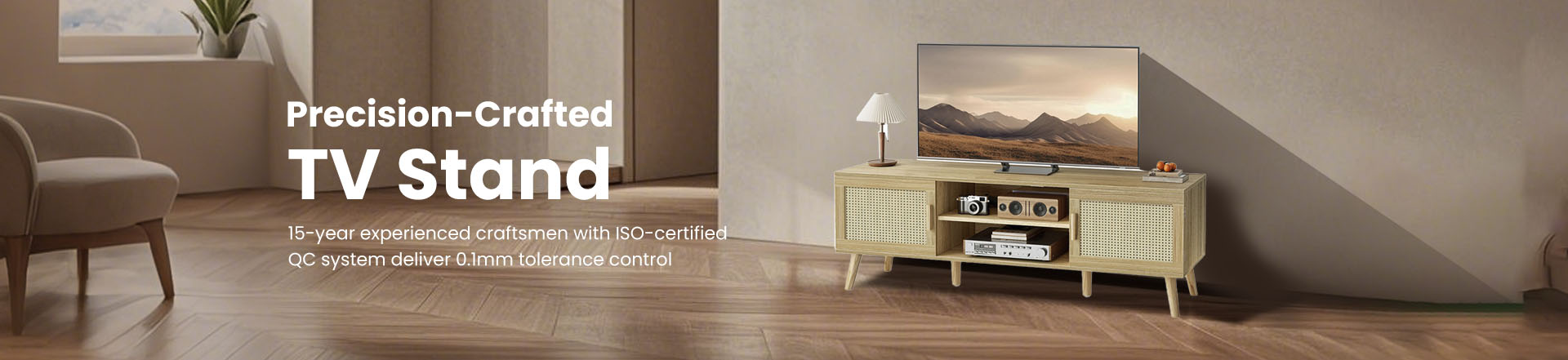
What are the Differences Between TV Stands and Entertainment Centers?
A TV Stand is a simpler television support unit with basic storage, while an entertainment center is a larger furniture system that combines TV support, storage, and display functions for complete media spaces.
Table of Contents
- Why Do Buyers Confuse tv stands And Entertainment Centers?
- What Is A TV Stand?
- What Is An Entertainment Center?
- What Is The Difference Between TV Stands And Entertainment Centers?
- When Should You Choose A TV Stand?
- When Should You Choose An Entertainment Center?
- How Do Furniture Manufacturers Design TV Storage Solutions?
- What Should Furniture Buyers Consider Before Purchasing?
- Can TV Stands And Entertainment Centers Be Customized?
- Need A TV Furniture Supplier For Your Project?
Why Do Buyers Confuse tv stands And Entertainment Centers?
TV stands and entertainment centers are both designed around television areas, but they serve different purposes.
Many buyers use these terms interchangeably because both products can include:
Television support
Storage compartments
Decorative functions
However, the main difference is the size, structure, and functionality.
A TV stand usually focuses on:
Supporting the television
Providing basic storage
Maintaining a simple appearance
An entertainment center is designed as a complete media furniture solution with more storage and a larger visual presence.
What Is A TV Stand?
A TV stand is a furniture piece designed to hold a television and provide essential storage space.
Common features include:
Open shelves
Drawers
Cabinets
Cable management areas
A TV Stand is suiTable for users who need:
A compact television solution
Simple storage
Flexible furniture placement
Common applications include:
Apartments
Bedrooms
Small living rooms
Modern interiors
What Is An Entertainment Center?
An entertainment center is a larger furniture system designed to organize the entire television and media area.
It may include:
TV cabinet
Side storage units
Display shelves
Additional cabinets
An Entertainment Center provides more functions than a standard TV stand.
It is commonly used for:
Large living rooms
Family entertainment areas
Premium residential projects
What Is The Difference Between TV Stands And Entertainment Centers?
| Comparison | TV Stand | Entertainment Center |
|---|---|---|
| Size | Compact | Larger furniture system |
| Storage | Basic storage | Multiple storage areas |
| Design | Simple structure | Complete media solution |
| Space Requirement | Suitable for smaller rooms | Better for larger spaces |
| Main Purpose | TV support | Complete entertainment organization |
When Should You Choose A TV Stand?
A TV stand is suitable when the room requires a practical and flexible solution.
It works well for:
Small Spaces
Apartments and compact rooms often benefit from smaller furniture pieces.
A TV stand can provide:
Television support
Basic storage
Space efficiency
Minimalist Interiors
Modern homes may prefer simple furniture designs that avoid visual clutter.
A TV stand can maintain:
Clean appearance
Functional layout
Flexible Room Arrangement
Unlike large furniture systems, TV stands are easier to:
Move
Replace
Rearrange
When Should You Choose An Entertainment Center?
Entertainment centers are better suited for users who need more storage and a complete design solution.
They are suitable for:
Large Living Rooms
Large spaces often require furniture with enough visual weight.
Entertainment centers can create:
Balanced proportions
A central focal point
Organized storage
Media-Focused Spaces
For users with multiple devices, entertainment centers can organize:
Game consoles
Speakers
Media players
Decorative items
Premium Interior Projects
Design-focused projects often require furniture that combines:
Function
Appearance
Storage
How Do Furniture Manufacturers Design TV Storage Solutions?
A successful TV furniture design requires more than appearance.
As a professional furniture manufacturer, production experience shows that important factors include:
Structural Stability
TV furniture needs to support:
Television weight
Storage items
Daily use
Functional Layout
Designers consider:
Cable management
Storage accessibility
Space utilization
Material And Surface Quality
Material selection affects:
Product appearance
Durability
Market positioning
What Should Furniture Buyers Consider Before Purchasing?
Professional buyers should evaluate:
Target Space
Consider:
Room size
Customer preferences
Interior style
Product Function
Determine whether customers need:
Basic TV support
Storage solutions
Complete entertainment furniture
Supplier Capability
A reliable supplier should provide:
Production consistency
OEM customization
Quality control
Can TV Stands And Entertainment Centers Be Customized?
Yes.
OEM furniture buyers may require:
Different sizes
Material options
Color finishes
Packaging solutions
Customization allows furniture brands and distributors to develop products for different markets.
Need A TV Furniture Supplier For Your Project?
Choosing between a TV stand and entertainment center depends on space requirements, storage needs, and design goals.
We provide customized TV furniture solutions for retailers, distributors, and OEM customers.
For customized designs, bulk orders, or project cooperation, submit your requirements through our Request A Quote page.