
What Is A Sideboard Cabinet?
A Sideboard Cabinet is a versatile piece of furniture that combines storage, display, and surface functionality in one unit. Originally used in dining rooms to store Tableware and serve food, sideboard cabinets have evolved into multi-purpose storage solutions suitable for modern living spaces. Today, they are commonly found in dining rooms, living rooms, hallways, and even home offices, offering both practical organization and visual balance within interior design.
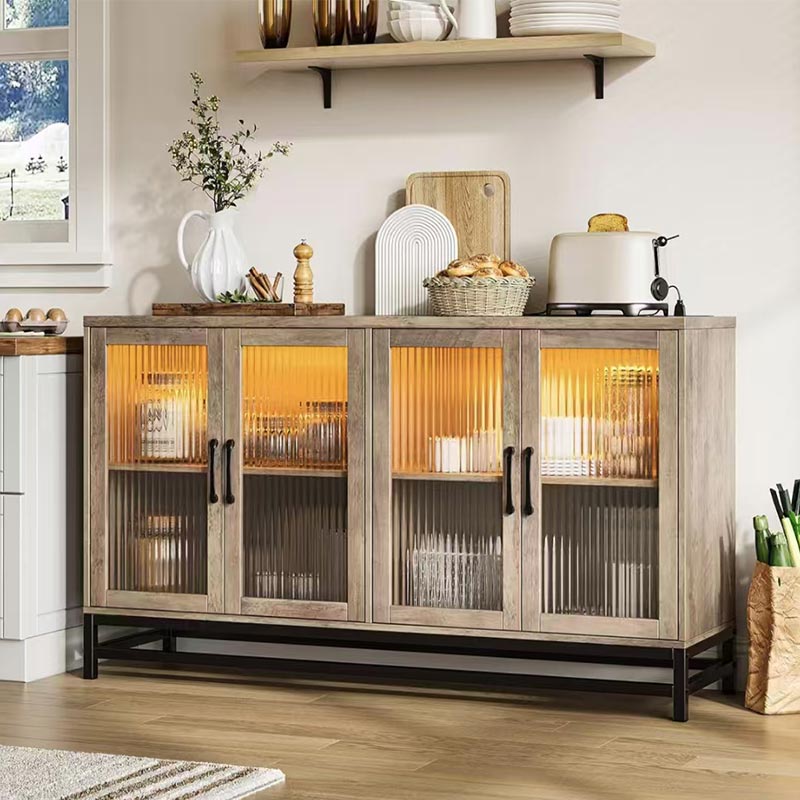
Table of Contents
- 1. The Core Definition of a Sideboard Cabinet
- 2. What Is a Sideboard Cabinet Used For?
- 3. Sideboard Cabinet vs Other Storage Furniture
- 4. Design Characteristics and Style Variations
- 5. Advantages of Using a Sideboard Cabinet in Modern Homes
- 6. Customization and Quality Considerations
- 7. Placement and Integration in Interior Spaces
- Conclusion
1. The Core Definition of a Sideboard Cabinet
At its core, a sideboard cabinet is a low-profile storage unit, typically wider than it is tall, featuring a combination of cabinets, drawers, or shelves. Its height is designed to keep the top surface easily accessible, making it suitable for serving, display, or daily-use storage. Unlike tall cabinets or wardrobes, a sideboard maintains a horizontal visual line that helps anchor a room without overwhelming the space.
Sideboards are often placed against walls, where they serve as both functional furniture and a design element. Their structure allows them to blend seamlessly into various room layouts while providing ample storage capacity.
2. What Is a Sideboard Cabinet Used For?
The function of a sideboard cabinet has expanded significantly beyond its traditional role. While it still performs well in dining settings, its adaptability makes it suitable for multiple purposes throughout the home.
Common uses include:
Storing dining essentials such as plates, glassware, and linens
Organizing household items in living rooms
Acting as a media or display cabinet
Serving as an entryway storage solution
Supporting home office organization
This flexibility is one of the reasons sideboard cabinets remain a long-term furniture choice rather than a trend-driven item.
3. Sideboard Cabinet vs Other Storage Furniture
Sideboard cabinets are often compared to buffets, credenzas, or console tables. While these pieces share similarities, sideboards are distinguished by their balance of storage depth and usable surface area.
A sideboard cabinet typically offers more enclosed storage than a console table and a lower, wider profile than a standard cabinet. This combination allows it to function as both storage and display without dominating vertical space. For modern interiors that emphasize openness and flow, this proportion is especially valuable.
4. Design Characteristics and Style Variations
Sideboard cabinets are available in a wide range of styles, materials, and finishes, allowing them to adapt to different interior aesthetics. From minimalist designs to more detailed, decorative structures, the sideboard’s form remains consistent while its appearance evolves.
Design characteristics often include:
Clean horizontal lines for visual stability
Combination of closed cabinets and drawers
Flat top surface for decor or functional use
Material choices that complement flooring and walls
This adaptability makes sideboard cabinets suitable for contemporary, transitional, and classic interiors alike.
5. Advantages of Using a Sideboard Cabinet in Modern Homes
One of the biggest advantages of a sideboard cabinet is its ability to reduce clutter while maintaining accessibility. Because items are stored at waist height, daily use remains convenient without the need for bending or reaching.
Additional advantages include:
Efficient use of wall space
Improved room organization
Visual balance through horizontal design
Multi-functional surface for display or utility
Long-term durability as a core furniture piece
In smaller homes or apartments, a sideboard cabinet can replace multiple smaller storage items, helping streamline the overall layout.
6. Customization and Quality Considerations
Not all sideboard cabinets are created equal. Construction quality, internal layout, and material selection play a significant role in long-term usability. A well-designed sideboard should provide smooth drawer operation, stable structure, and a layout that supports real-life storage needs.
DAKSHOME develops sideboard cabinet solutions with a focus on functional internal space, balanced proportions, and finishes that integrate easily into modern interiors. Attention to material durability and thoughtful compartment design allows these cabinets to serve both decorative and practical purposes over time.
Customization options such as size variation, internal configuration, and finish selection help ensure that the sideboard fits the specific needs of different households.
7. Placement and Integration in Interior Spaces
Choosing the right placement enhances the effectiveness of a sideboard cabinet. In dining rooms, it supports serving and storage; in living rooms, it anchors the wall visually; in hallways, it provides organized entry storage without blocking movement.
The key to successful integration lies in matching the cabinet’s width and height to the surrounding furniture and wall space. When proportioned correctly, a sideboard cabinet enhances spatial harmony rather than competing with other elements.
Conclusion
A sideboard cabinet is a low-profile, multi-functional storage solution designed to combine organization, accessibility, and visual balance. Its versatility allows it to adapt to various rooms and purposes, making it a long-term addition to modern homes. By offering efficient storage, a usable surface, and adaptable design options, sideboard cabinets continue to play a central role in interior furniture planning. Choosing a well-constructed, thoughtfully designed sideboard ensures both practical value and aesthetic longevity.
Previous: How To Make A Sideboard Cabinet?