
How Wide Is A File Cabinet?
File cabinet width is not a single fixed number. It depends on the cabinet style, the paper size it is designed for, how many columns of files it holds, and whether it is a vertical or lateral configuration. For planning an office layout, the most useful approach is to understand the common width ranges by cabinet type, then match them to your filing method, available wall space, and walkway clearance. This guide explains typical file cabinet widths, how to measure correctly, and how to choose the right size for your workspace.
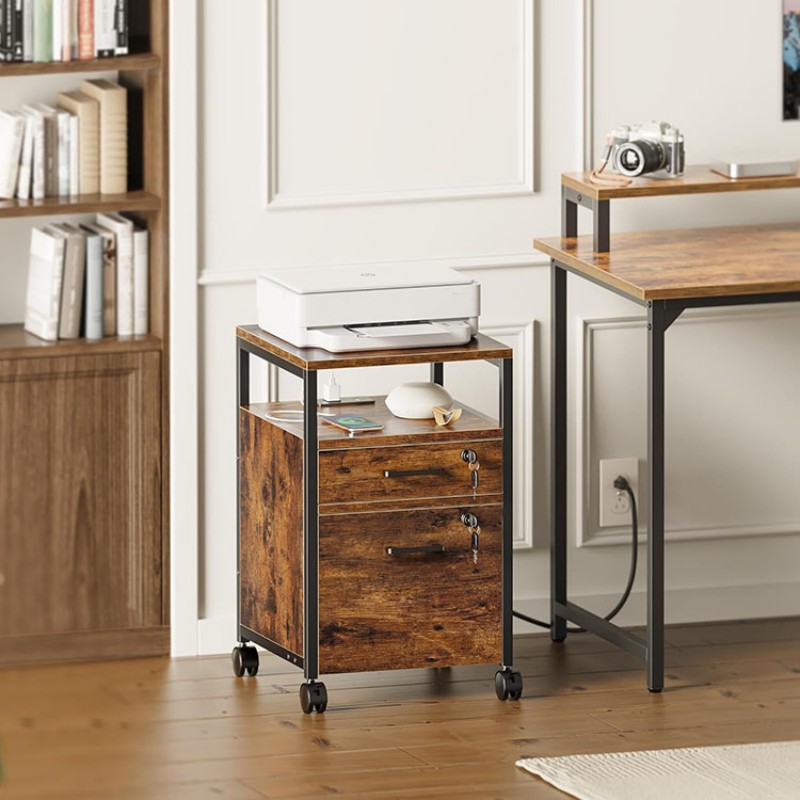
Table of Contents
- Typical File Cabinet Width Ranges
- Vertical File Cabinet Width
- Lateral File Cabinet Width
- Standard Width Reference Table
- How To Measure File Cabinet Width Correctly
- Width vs Capacity: What Width Actually Buys You
- Other Dimensions That Matter Alongside Width
- Choosing The Right Width For Your Office
- DAKSHOME Office Storage Cabinet Options And Customization
- Conclusion
Typical File Cabinet Width Ranges
Most file cabinets fall into two broad categories: vertical and lateral. Vertical cabinets are narrower and extend upward, making them suiTable for compact floor footprints. Lateral cabinets are wider and often lower, designed to place files side-by-side for faster access and better top-surface usability.
Common width ranges you will see in the market:
Vertical file cabinets
Often about 15–18 inches wide, roughly 38–46 cm, depending on construction and whether they store letter or legal files.Lateral file cabinets
Often about 30–42 inches wide, roughly 76–107 cm, with 36 inches, about 91 cm, being a very common mid-size.
These ranges are common enough to use for early planning, but the final decision should be based on how you file, how you open drawers, and how much storage volume you actually need.
Vertical File Cabinet Width
Vertical file cabinets are the narrowest mainstream option. They usually store files front-to-back inside each drawer. That internal orientation is the reason the width can stay relatively small.
Typical vertical cabinet widths in practice:
2-drawer vertical
About 15–18 inches wide, roughly 38–46 cm3-drawer vertical
About 15–18 inches wide, roughly 38–46 cm4-drawer vertical
About 15–18 inches wide, roughly 38–46 cm
What changes most across 2, 3, and 4 drawers is height, not width. If you are choosing a vertical model, focus on drawer extension, stability, anti-tip features, and the space needed to fully open a drawer without blocking walkways.
Lateral File Cabinet Width
Lateral file cabinets store files side-by-side from left to right. This makes them wider, but it also makes them easier to use in many workflows because you can see more file labels at once and often access documents faster.
Typical lateral cabinet widths in practice:
2-drawer lateral
About 30–42 inches wide, roughly 76–107 cm3-drawer lateral
About 30–42 inches wide, roughly 76–107 cm4-drawer lateral
About 30–42 inches wide, roughly 76–107 cm
A 36-inch wide lateral cabinet is a common balance point because it fits many offices without dominating a wall, while still offering meaningful capacity. Wider models can reduce the number of cabinets you need, but they require more wall space and more clearance for drawer operation.
Standard Width Reference Table
Use the table below for quick planning. Exact dimensions vary by design, material thickness, and handle style, so treat these as typical ranges rather than guarantees.
| Cabinet Type | Typical Width In Inches | Typical Width In Cm | Best For |
|---|---|---|---|
| Vertical 2–4 Drawer | 15–18 | 38–46 | Small footprint, higher storage |
| Lateral 2–4 Drawer | 30–42 | 76–107 | Side-by-side filing, faster access |
| Narrow Mobile Pedestal | 12–16 | 30–41 | Under-desk storage, compact offices |
| Wide Storage Cabinet With File Function | 28–48 | 71–122 | Mixed storage, files plus supplies |
If your workspace includes both filing and general storage, an Office Storage Cabinet that integrates filing compatibility can be easier to standardize across departments, especially for bulk order projects.
How To Measure File Cabinet Width Correctly
To avoid fit problems, measure the cabinet the same way manufacturers do. Width is usually the outside dimension from the leftmost edge to the rightmost edge, including side panels and often including the drawer front. Handles may add additional projection, so consider that separately if you have tight corridors.
A practical measurement checklist:
Overall cabinet width
Measure outside edge to outside edge at the widest point.Handle projection
Measure how far handles extend beyond the drawer front if the cabinet sits near a walkway.Drawer opening clearance
Confirm that drawers can open fully without hitting a wall, desk, or another cabinet.Walkway allowance
Plan for comfortable movement when drawers are open, especially in shared office zones.Wall and corner constraints
If the cabinet sits near a corner, ensure the drawer does not collide with trim or adjacent furniture.
For project layouts, it helps to mark the planned width on the floor with tape, then simulate drawer extension. This simple step often prevents costly layout mistakes.
Width vs Capacity: What Width Actually Buys You
Width is not only about fitting into a room. It directly affects filing capacity and usability.
Vertical cabinets
Narrow width, smaller footprint. Capacity increases mostly by adding height, which can be space-efficient but may slow access if files are spread across multiple drawers.Lateral cabinets
Wider width, often more label visibility and quicker access. They can hold more folders per drawer because files are arranged side-by-side.
If your users frequently retrieve and re-file documents, lateral cabinets can feel more efficient. If floor space is limited, vertical cabinets can be the better choice. For many offices, a mix is ideal: lateral for active files and vertical for archive storage.
Other Dimensions That Matter Alongside Width
Width is only one part of fit. Depth and height often decide whether the cabinet feels comfortable in daily use.
Depth
Deeper cabinets can store more, but they may not suit narrow rooms. Depth also affects drawer extension needs.Height
Taller cabinets increase capacity without increasing width. They can be space-saving but require stability planning.Top-surface function
Lateral cabinets are often used as a support surface for printers, supplies, or display items, so width can also influence how useful the top is.
When choosing an office storage cabinet for modern workspaces, many buyers also consider cable management around printers and labeling systems, because these details impact real productivity.
Choosing The Right Width For Your Office
A reliable way to decide is to start from the wall space and workflow, then select the cabinet type.
Choose a vertical file cabinet if
You need a narrow footprint, you have limited wall width, or you want to stack capacity vertically.Choose a lateral file cabinet if
You want fast access, wider drawer visibility, and a more usable top surface for shared equipment.Choose a storage cabinet with file compatibility if
You need both files and general supplies in one unit, or you want a unified look across different office zones.
For large office rollouts, specifying a small number of standard widths can simplify purchasing, installation, and future expansion.
DAKSHOME Office Storage Cabinet Options And Customization
DAKSHOME provides office storage cabinet solutions designed to match common office layout needs, including models that prioritize practical width planning, stable construction, and clean workplace aesthetics. For project buyers, we can support OEM/ODM development so you can align dimensions, internal structure, finish, labeling zones, and packaging requirements with your deployment plan. This also makes it easier to execute a consistent bulk order across multiple rooms or sites.
Conclusion
A file cabinet is typically about 15–18 inches wide for vertical styles and about 30–42 inches wide for lateral styles, with the best choice depending on your space and filing workflow. The most important step is measuring overall width correctly and planning clearance for drawer extension and walkways. Once you match cabinet width to your room constraints and how people actually access documents, the result is a cleaner layout, better organization, and more predictable daily use.
If you are selecting an office storage cabinet and want help confirming the right width for your layout, you can browse DAKSHOME options and share your space requirements with our team. We can provide selection guidance and support OEM/ODM customization and bulk order coordination to fit your project specifications.
Previous: What Size Is A Queen Bed Frame?