Why Do Furniture Retailers Prefer Sideboard Cabinets With Mixed Open And Closed Storage?
A sideboard sells best when customers can understand its use within a few seconds. In a furniture store, people rarely stand in front of a cabinet and read a full specification first. They look at the doors, imagine where dinnerware would go, check the top surface, and decide whether it can make a dining room or living room feel more complete.
That is why mixed open and closed storage matters for furniture retailers. It gives one cabinet more selling angles. The visible part helps customers imagine display value. The hidden part answers the real storage need. A cream and oak sideboard also brings a softer color direction, making the cabinet easier to place in modern homes, apartments, dining rooms, and light living spaces.
Table of Contents
A Sideboard Has To Work Hard In A Retail Showroom
Customers Buy The Scene Before They Buy The Cabinet
Retail stores need furniture that creates a room feeling, not only a storage function. A cabinet with glass doors, warm lighting, and a wide top surface can be staged with plates, cups, books, plants, coffee tools, framed photos, or small decorative objects. This helps customers picture the cabinet inside their own home.
A fully closed cabinet may look neat, but it gives the sales team fewer visual stories to work with. A mixed-storage sideboard gives the showroom more depth. It can show lifestyle, storage, display, and home organization at the same time.
The First Impression Needs To Feel Light
Large cabinets can easily make a showroom corner feel heavy. Cream and oak tones reduce that pressure. They look warmer than pure white and softer than dark wood. For retailers serving customers with smaller dining rooms or open-plan apartments, this lighter color combination can make the cabinet feel easier to accept.
A cream and oak sideboard is especially useful for stores that need flexible display furniture. It can sit beside neutral sofas, dining Tables, rattan chairs, warm lighting, pale flooring, or simple wall panels without fighting the rest of the room.
Mixed Storage Helps Sales Staff Explain Value Faster
Glass Doors Create Display Confidence
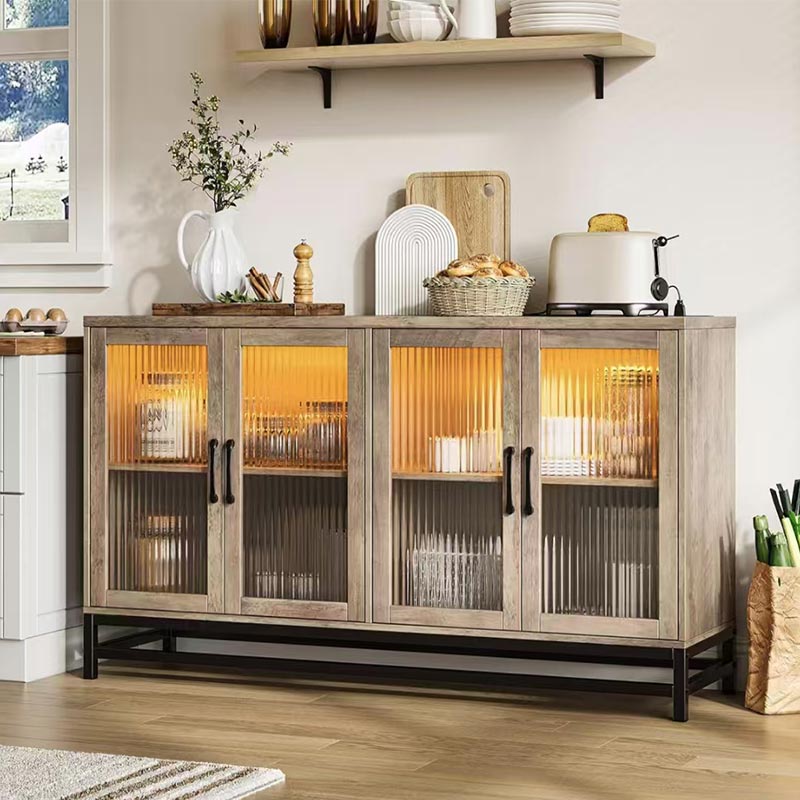
The DAKSHOME Dining Room Sideboard uses four striped glass doors, which can protect items from dust while still allowing tableware and decorations to be seen. This is useful for retail display because customers can understand the cabinet’s function without opening every door.
The glass area gives the furniture a more refined feeling. It also helps stores present the sideboard as more than a basic storage cabinet. For dining room buyers, the ability to show selected items while keeping the room tidy is a clear selling point.
Closed Areas Keep Daily Clutter Out Of Sight
A sideboard also needs to solve the parts of home storage that customers do not want to display. Extra plates, napkins, serving tools, snacks, small appliances, documents, or daily-use items need a place to go.
Closed storage makes the cabinet practical for real homes. This balance is important for retailers because shoppers often like attractive furniture, but they purchase furniture that solves daily problems. A mixed-storage layout helps both sides of the decision.
The Top Surface Adds Another Sales Scenario
More Than A Dining Cabinet
The wide countertop gives furniture retailers another way to stage the cabinet. It can be shown with a coffee machine, toaster, lamp, vase, tray, books, candles, or seasonal decoration. This makes the cabinet suitable for more than one room story.
In a dining area, it can support tableware and serving needs. In a living room, it can act as a display cabinet. In an apartment, it can become a storage-and-decoration piece. For retailers, every extra scene makes the cabinet easier to recommend.
Why This Layout Helps Reduce Slow-Moving Stock
One Narrow Use Can Limit Sales
Slow-moving furniture often has a simple problem: it only works for one type of buyer. A cabinet that looks too formal may not attract apartment customers. A cabinet that looks too plain may not stand out in a store. A cabinet with only hidden storage may feel practical but not attractive enough.
Mixed open and closed storage gives the retailer more room to reposition the same cabinet. It can be promoted as dining room storage, display furniture, living room cabinet, apartment storage, or soft modern home furniture.
More Use Cases Can Improve Reorder Confidence
Retailers usually reorder items that are easy to sell across different customers. A sideboard with a gentle color direction, visible display area, layered internal storage, and a stable structure gives the sales team more ways to match customer needs.
DAKSHOME’s Dining Room Sideboard uses a wood structure with a solid metal base, built-in lighting, striped glass doors, layered storage, and a spacious top. For stores and distributors, these details help the cabinet work in both display-focused and storage-focused selling conversations.
Matching Style Matters For Furniture Stores
Cream And Oak Fits Current Home Interiors
Many customers now prefer furniture that looks warm, calm, and easy to match. Cream and oak works well with soft minimalist interiors, Scandinavian-style rooms, modern dining spaces, and small apartments. It also pairs easily with light floors, neutral walls, beige sofas, and warm metal details.
For furniture retailers, this reduces display risk. A bold color may attract attention but narrow the customer base. A softer finish direction can serve more home styles and make store planning easier.
The Cabinet Can Support Cross-Selling
A sideboard is often displayed with dining tables, chairs, wall shelves, tableware, lamps, mirrors, or Coffee Tables. When the cabinet color is easy to match, the retailer can build a complete room corner around it.
This matters because the sideboard can help sell more than itself. It can support a wider furniture display, giving customers a clearer reason to buy several pieces together.
Before Adding Another Sideboard To Your Retail Range
A cream and oak sideboard with mixed open and closed storage can help furniture stores make the cabinet easier to present and easier for customers to understand. The better question for retailers is not only whether the sideboard has enough storage. It is whether the cabinet can help the store sell a complete room idea.
For furniture retailers, distributors, apartment furnishing buyers, or showroom planners looking for dining room and living room cabinet options, we can support this selection work. Share the target market, preferred size range, finish direction, display needs, packing requirements, and order plan with our team. We can help match this dining room sideboard with your retail or project furniture plan, so the cabinet is easier to display, explain, and reorder.