
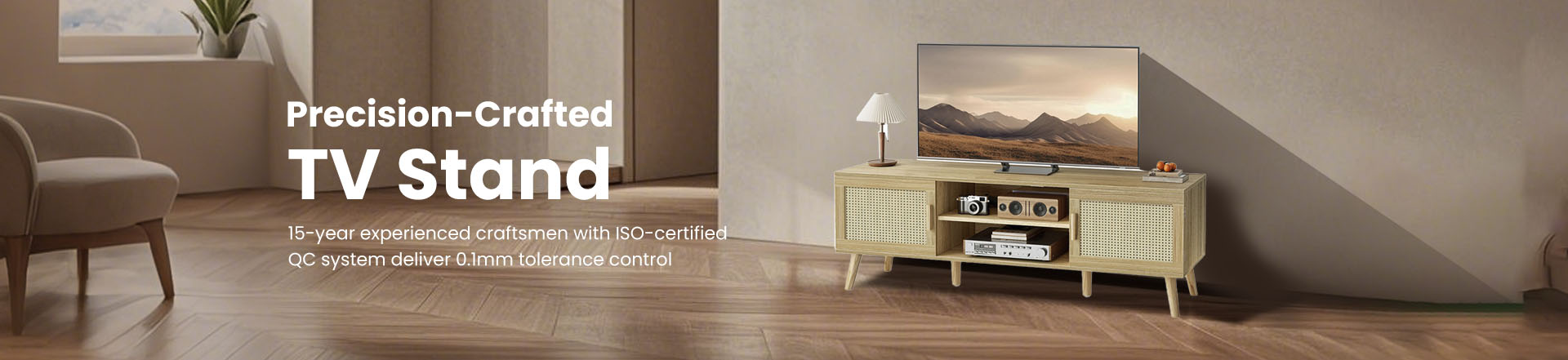
TV Stand vs. Entertainment Center: Which Fits Your Living Room?
A TV Stand is usually a low, relatively compact unit designed to support a television and store media equipment. An entertainment center is a larger furniture system that may surround the television with towers, shelves, cabinets, or an overhead bridge. Choosing between a tv stand and an entertainment center depends on wall size, television dimensions, storage needs, room circulation, installation effort, and the visual effect you want.
Table of Contents
- Begin with the Available Wall—not the Television Alone
- When a TV Stand Works Better
- When an Entertainment Center Works Better
- How Storage Style Changes the Decision
- Safety and Structural Considerations
- A Five-Minute Selection Test
- Consider Future Changes
- Supplying Living-Room Furniture for Retail and Project Buyers
- The Right Choice for Your Living Room
Begin with the Available Wall—not the Television Alone
Measure the wall width, baseboards, electrical outlets, doors, windows, vents, and walking routes. Then mark the proposed furniture footprint on the floor.
A television may physically fit on a cabinet while the overall composition still feels crowded. Leave appropriate space for cable connections and ventilation, and follow the television manufacturer’s installation and clearance instructions.
Important measurements include:
TV width, depth, and stand-foot spacing
Furniture top width and usable depth
Room wall width
Distance to doors and traffic paths
Socket and data-port locations
Required viewing distance
Maximum equipment height
Clearance for cabinet doors and drawers
Screen size is measured diagonally, so a “65-inch TV” is not 65 inches wide. Always use the television’s actual external dimensions.
When a TV Stand Works Better
A TV stand is usually the more flexible option for apartments, bedrooms, rented homes, minimalist interiors, and rooms where furniture may be rearranged.
Main Advantages
A TV stand occupies less visual and physical space than a full entertainment center. It is easier to position beneath a wall-mounted TV and may be simpler to pack, deliver, assemble, or relocate.
Modern designs can still include substantial storage. Drawers hide small accessories, open shelves support media equipment, and cabinets organize games, controls, books, or household items.
We offers TV stands in different configurations, including models with storage, drawers, open compartments, and combined cabinet functions.
Possible Limitations
A compact TV stand may not store a large media collection. The top must also be wide and strong enough for a television that rests on its own feet.
Open shelves can make cables and equipment visible, while closed cabinets may need ventilation and suiTable signal access for electronic devices.
When an Entertainment Center Works Better
An entertainment center is useful when the television wall must also provide extensive storage or act as the room’s main visual feature.
Tall side units and upper shelves can use vertical space efficiently. The system may hold books, décor, speakers, consoles, family photographs, and concealed household storage.
This solution is often more appropriate for:
Large living rooms
Permanent family homes
Extensive media collections
Feature-wall installations
Buyers wanting coordinated display and closed storage
Rooms with limited space for separate cabinets
The tradeoff is reduced flexibility. A large entertainment center requires more assembly space, careful wall measurement, and sometimes wall anchoring. Its TV opening may also restrict future screen upgrades.
How Storage Style Changes the Decision
Think about what will actually be stored.
Open shelves offer easy access and ventilation, but they also expose cables and dust. Drawers hide small items, although they need enough front clearance to open. Door cabinets reduce visual clutter but should not obstruct airflow around heat-generating equipment.
A combination design often provides the best balance. For example, a dresser TV stand combo integrates television support with multi-drawer storage, making it useful where one piece of furniture must perform several functions.
Safety and Structural Considerations
Check the stated or verified load capacity before placing a television or other heavy equipment on the top panel. Weight should be distributed as intended, and the furniture must stand level.
Tall entertainment centers and storage units may require anti-tip restraint according to their design, local requirements, and installation environment. Anchoring hardware must be compatible with the wall construction.
Neither a TV stand nor an entertainment center should block ventilation outlets. Power strips and excess cable should not be enclosed in a way that creates heat buildup. Installation instructions for the television and electrical products take priority over general furniture advice.
A Five-Minute Selection Test
Ask these questions in order:
Will the television sit on the furniture or be wall-mounted?
Does the selected unit accommodate the TV’s actual width and foot spacing?
How many devices, cables, and accessories need storage?
Will the room benefit from open visual space or a full feature wall?
Could the television become larger in the next few years?
Can the furniture be anchored where necessary?
Is the product practical to deliver and assemble in the room?
A TV stand is generally the safer choice when flexibility and open space matter. An entertainment center becomes more useful when storage and visual integration take priority.
Consider Future Changes
Televisions are often replaced sooner than furniture. A narrowly sized entertainment-center opening may fit the current screen but prevent a larger model from being installed later.
A low console with a wall-mounted television creates more freedom for future changes. A modular entertainment center can also reduce this problem if the towers or upper elements can be arranged independently.
For small homes, a TV stand with drawers or side cabinets may eliminate the need for another storage unit. This makes its usable storage volume more important than its external size alone.
Supplying Living-Room Furniture for Retail and Project Buyers
DAKSHOME manufactures panel-based home furniture with customizable dimensions, colors, finishes, storage arrangements, hardware, and packaging. Our production scope covers living-room furniture as well as coordinated home-office, bedroom, dining-room, kitchen, and bathroom categories.
As a TV stand wholesale supplier, we support buyers who need repeatable models for retail, e-commerce, apartment furnishing, or distribution programs. Our team can review TV-size positioning, panel combinations, drawer and door layouts, metal structures, cable openings, product labeling, and flat-pack carton requirements.
Material inspection, machining checks, trial assembly, surface inspection, packing control, and loading supervision form part of our quality process.
The Right Choice for Your Living Room
Select a TV stand when the room needs flexibility, a lighter appearance, and practical media storage. Select an entertainment center when the wall can accommodate a larger structure and the household needs extensive display or concealed storage.
The best product is not necessarily the biggest one. It is the unit that safely fits the television, supports the room’s storage routine, preserves comfortable circulation, and remains useful when the media setup changes.