
How To Build A Custom House?
Building a custom house gives homeowners more control over the floor plan, storage, materials, lighting, and daily living experience. It also requires careful coordination between the land, budget, designer, contractor, local approval process, and interior plan.
The most effective custom homes are not designed room by room in isolation. The structure, utilities, furniture dimensions, traffic flow, and storage requirements should be considered together from the beginning.
Table of Contents
Define the Budget and Project Scope
Before drawing the floor plan, decide what the project must include and which features are optional.
Set a Realistic Total Budget
The budget should cover more than the main construction contract. It may also include land preparation, professional design, approvals, utility connections, landscaping, appliances, furniture, and a contingency reserve.
A clear budget helps the designer determine the suiTable building size, material level, and room arrangement.
List the Essential Rooms
Identify the number of bedrooms, bathrooms, work areas, storage zones, and shared living spaces required by the household.
Think about future needs as well. A flexible room may later become a home office, guest room, nursery, or hobby area.
Choose the Land and Design Team
The site can influence the foundation, drainage, sunlight, access, and overall cost of the house.
Evaluate the Building Site
Before finalizing the design, review the site dimensions, ground conditions, road access, surrounding buildings, and utility availability.
Local construction rules and permit procedures vary, so qualified local professionals should confirm what can legally and safely be built.
Develop the Floor Plan
The architect or designer should connect room size with furniture placement and movement.
For example, a living room should not only show the sofa and television position. It should also reserve suitable space for a Modern TV Stand With Storage, cable routing, ventilation, opening doors, and viewing distance.
Plan Storage Before Construction
Storage is often added too late, after the walls and electrical points have already been fixed.
Coordinate Furniture and Electrical Layouts
The television wall should include correctly positioned power outlets, network connections, and cable access.
Knowing the width and height of the TV cabinet in advance helps prevent sockets from being hidden behind structural panels or installed too far from the equipment.
Use Furniture to Reduce Visual Clutter
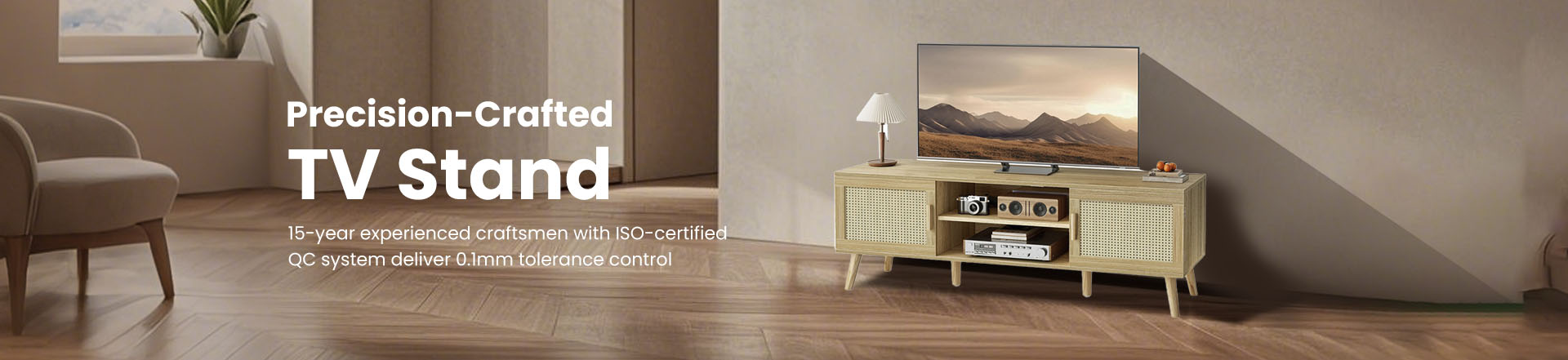
A Modern TV Stand With Storage can combine an entertainment surface with closed cabinets, an adjustable shelf, and cable-management openings.
Our model uses PB and MDF panels, offers enclosed side storage, and supports customization of size, material, logo, and packaging. Its adjustable center shelf also helps accommodate different media devices and accessories.
Complete Construction in Controlled Stages
Once the design and approvals are complete, construction can proceed through foundation work, structural framing, roofing, mechanical and electrical installation, interior finishing, and final inspection.
Inspect Work Before It Is Covered
Electrical wiring, plumbing, waterproofing, and structural connections should be inspected before walls, ceilings, or flooring conceal them.
Photographing hidden services can also make future maintenance easier.
Measure Rooms Again Before Ordering Furniture
Finished wall thickness, skirting, flooring, and door frames may slightly change the available dimensions.
Final site measurements help buyers choose furniture that fits the completed space rather than relying only on early drawings.
How Our Factory Supports Custom Home Furniture Projects
Our factory produces living-room, bedroom, office, dining-room, kitchen, and Bathroom Furniture. We support OEM and ODM development based on customer drawings, target dimensions, materials, colors, and packaging requirements.
Our quality-control process covers raw materials, production, packing, and container loading. With an independent supply chain and monthly production capacity stated at up to 80 forty-foot high-cube containers, we can support distributors, project buyers, and furniture brands with repeat orders and coordinated product ranges.
Plan a Modern TV Stand With Storage for Your Project
Preparing furniture specifications for a custom house, apartment project, hotel, or retail collection?
Send us your target dimensions, panel material, finish, storage layout, TV size, packaging standard, and order quantity. Our team will review your requirements and prepare a Modern TV Stand With Storage proposal.